Gateway-first discovery
Start where the MAC-routing evidence is most concentrated, then walk the path instead of opening sessions to every access switch.
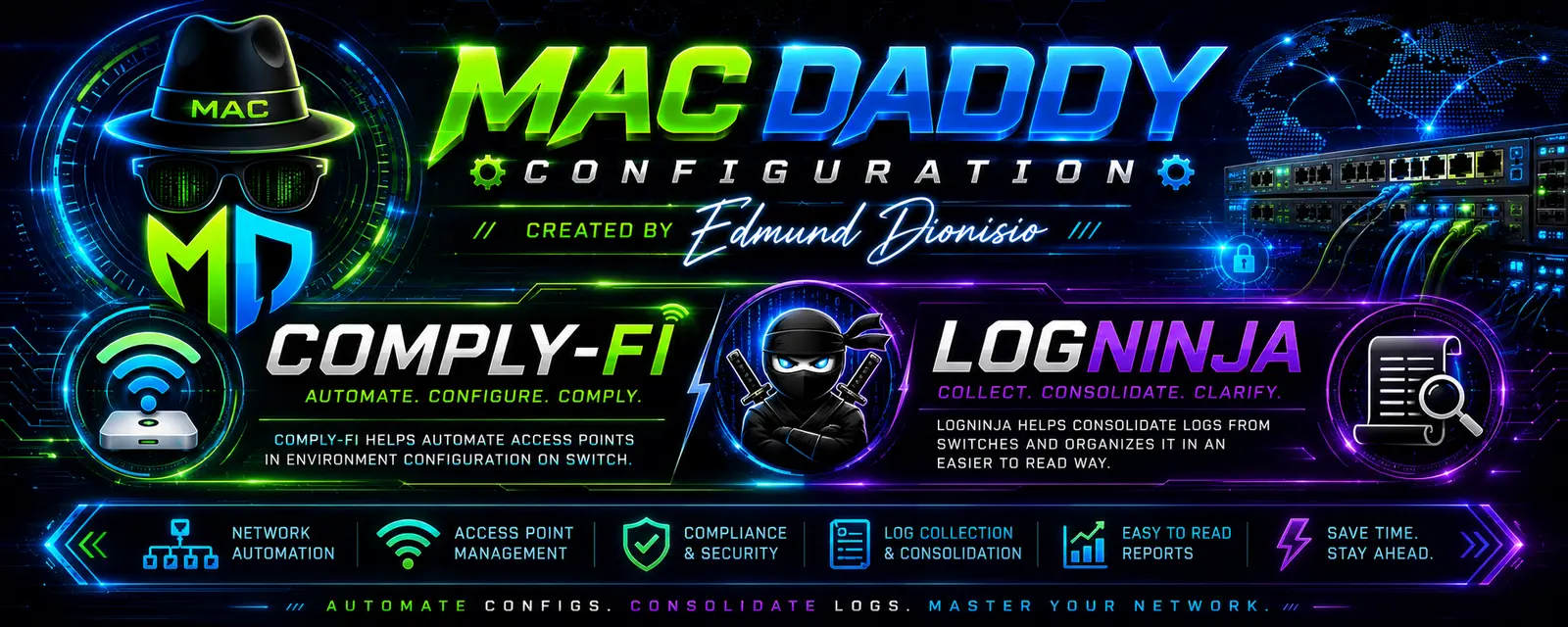
Network operations platform
Trace, diagnose, and remediate a network edge from one evidence-driven workspace—without turning convenience into uncontrolled switch access.
This started with the kind of ticket every network engineer knows: a customer reports a device problem but can only provide a fragment of useful information. Finding that endpoint across more than 100 switches meant repeating gateway searches, MAC-table checks, path tracing, interface diagnostics, and follow-up commands by hand.
MacDaddy turns that sequence into one coordinated job. Automating discovery reduced response time and gave me one place to preserve the evidence, policy decision, change preview, verification, and rollback trail.
The MAC-tracing algorithm took the most trial and error. The real switching environment had paths and edge cases that did not fit a textbook diagram, so I kept instrumenting each hop, reading the logs, and tuning the approach until it matched how this network actually behaves.
The web interface coordinates jobs and presents evidence; device access remains behind typed validation, policy checks, bounded SSH resources, and a dedicated execution layer.
React UISearch, evidence cards, previews, live job progress, reports, access controls.
FastAPIAuthenticated routes, CSRF protection, WebSockets, job and schedule coordination.
Policy + jobsTarget allowlists, safety verdicts, write leases, stale-evidence gates, audit events.
Jump hostBounded two-hop SSH with retry/backoff and circuit-breaker behavior.
Network edgeLive read, guarded command execution, read-back verification, rollback capture.
Accept a full or partial MAC and validate the input before any device access.
Reduce unnecessary access-switch sessions, then follow the learned downstream path.
Collect configuration, status, counters, authentication, neighbors, and learned MAC evidence.
Re-read live state, validate the proposed command scope, and show exactly what would change.
Capture rollback, acquire a per-switch lease, execute, read back, save once per verified switch, and audit the result.
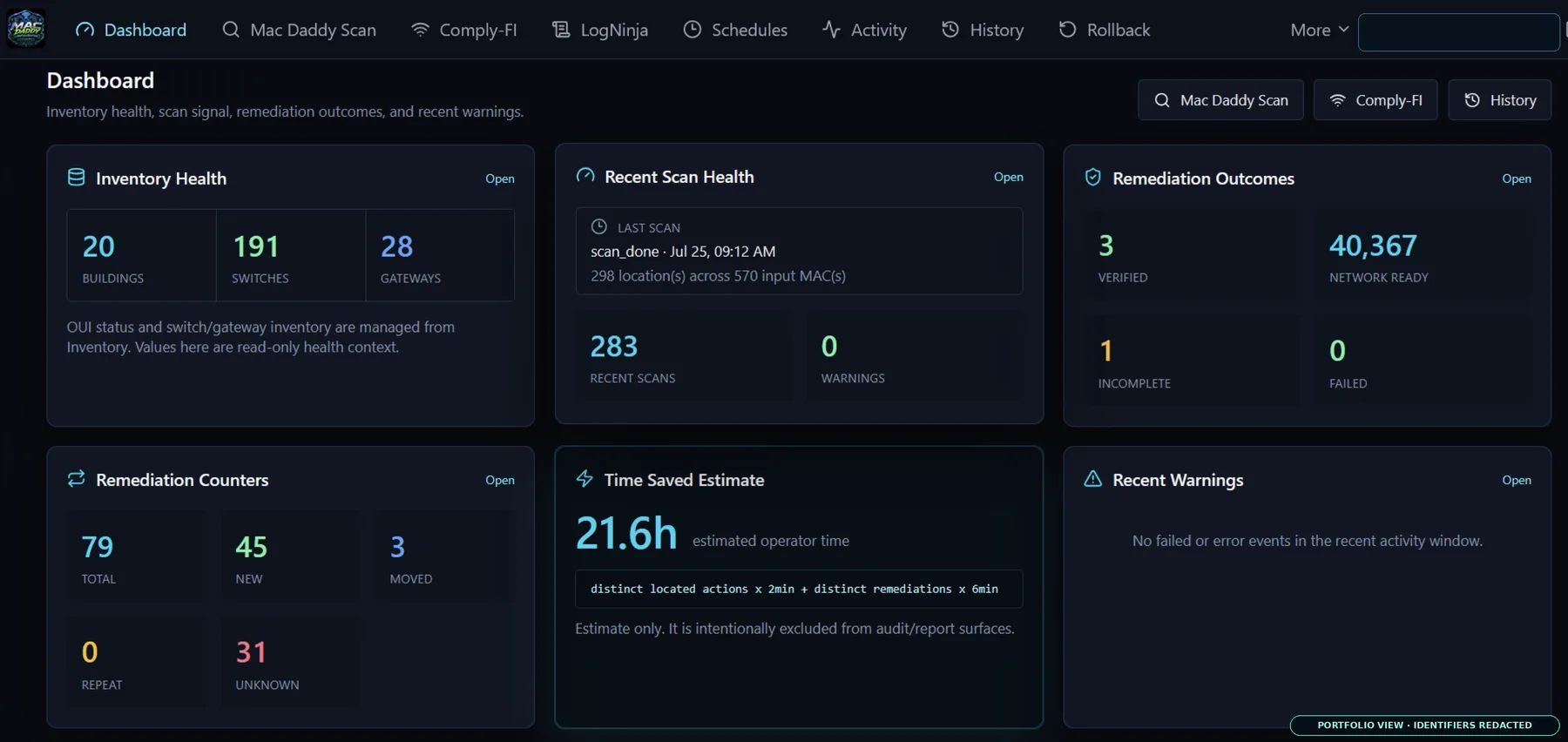
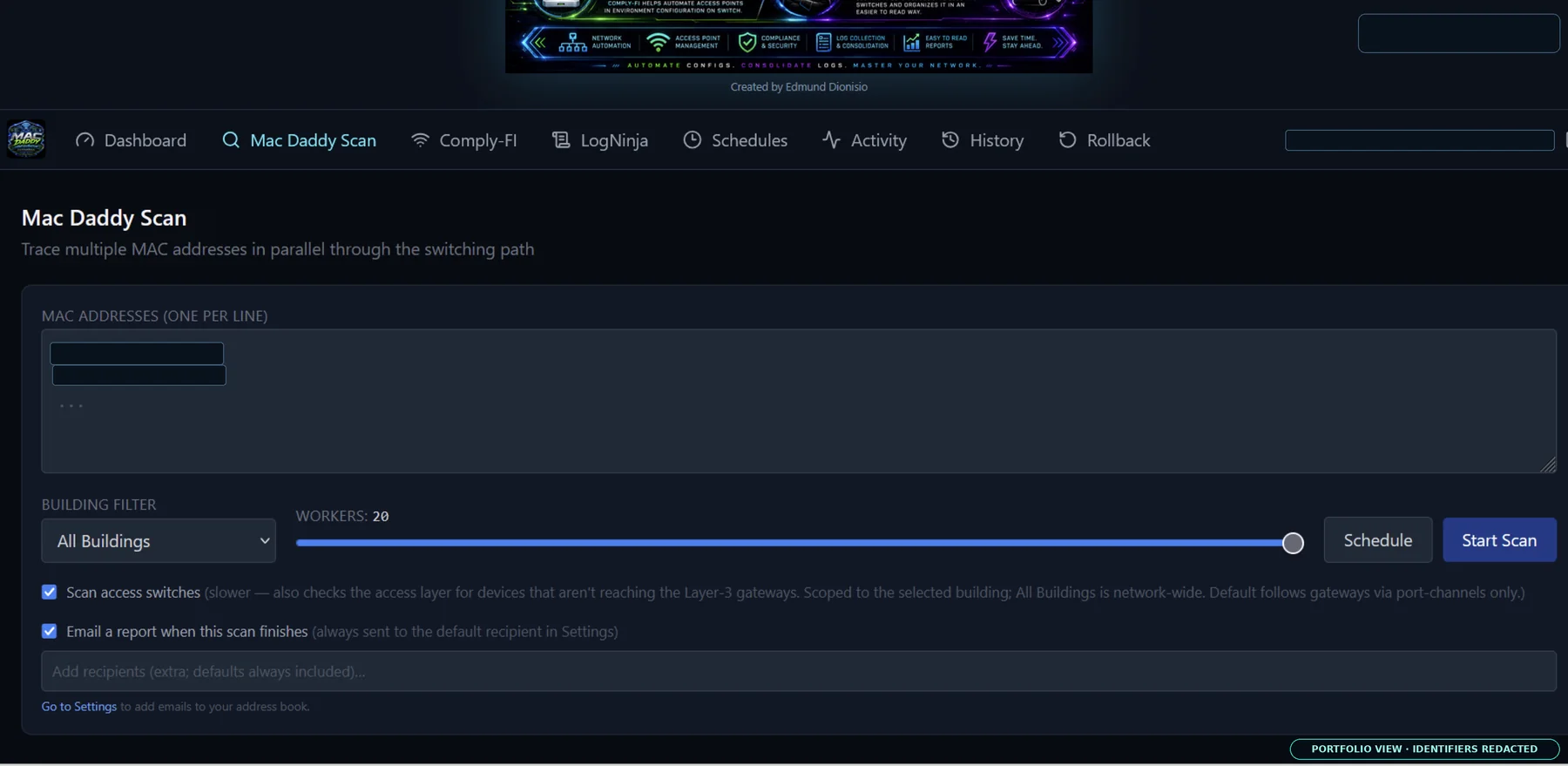
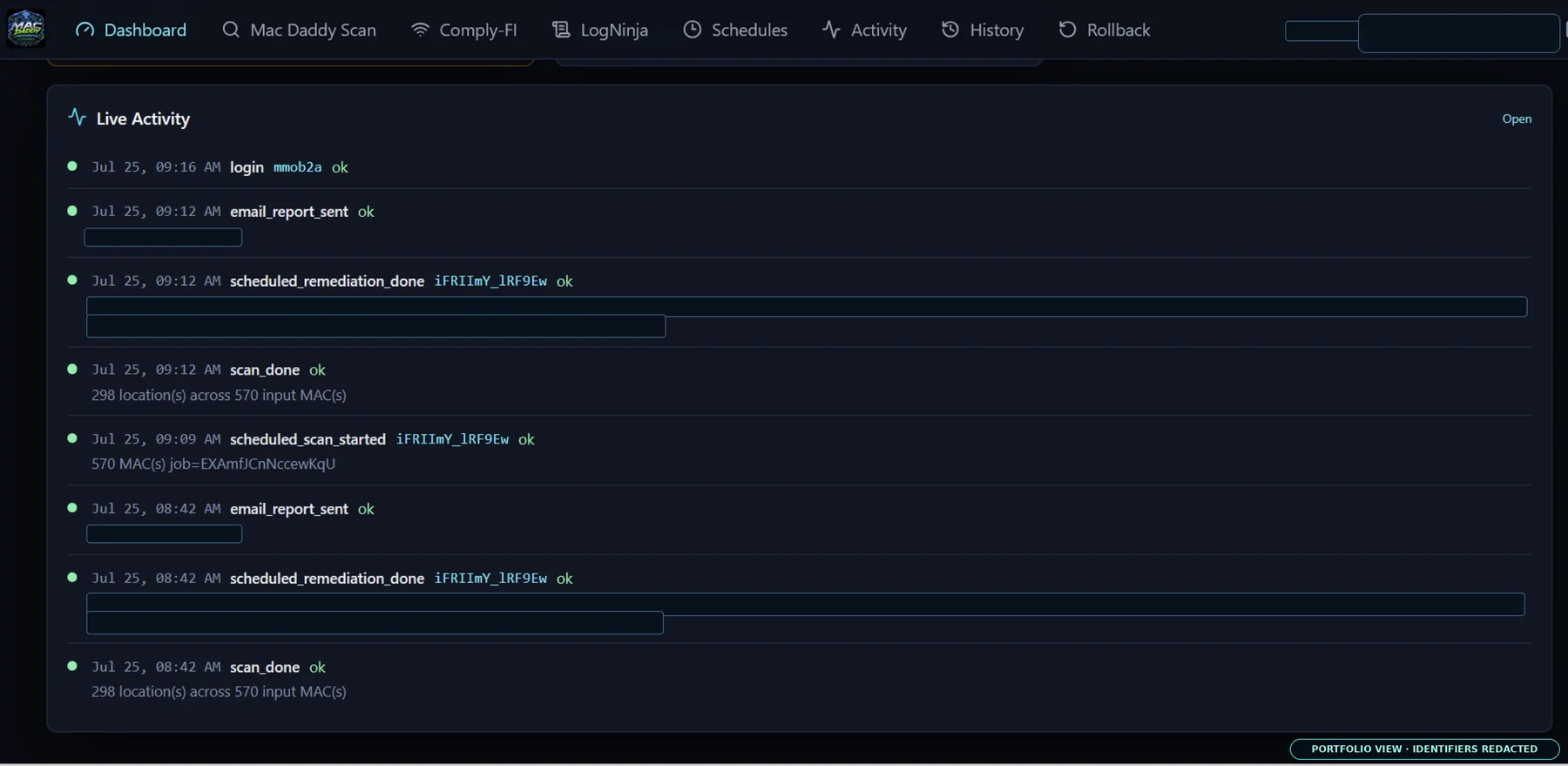
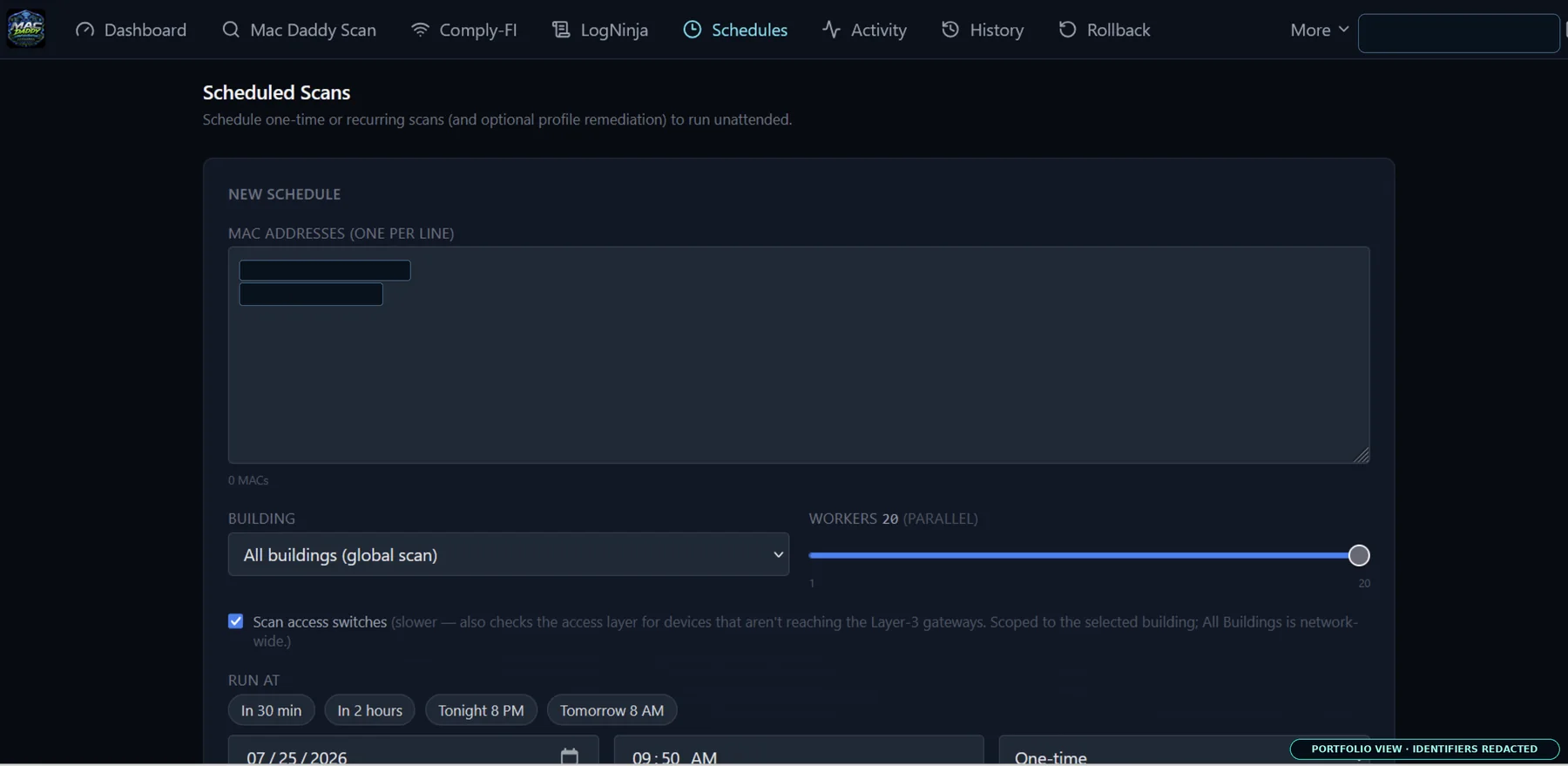
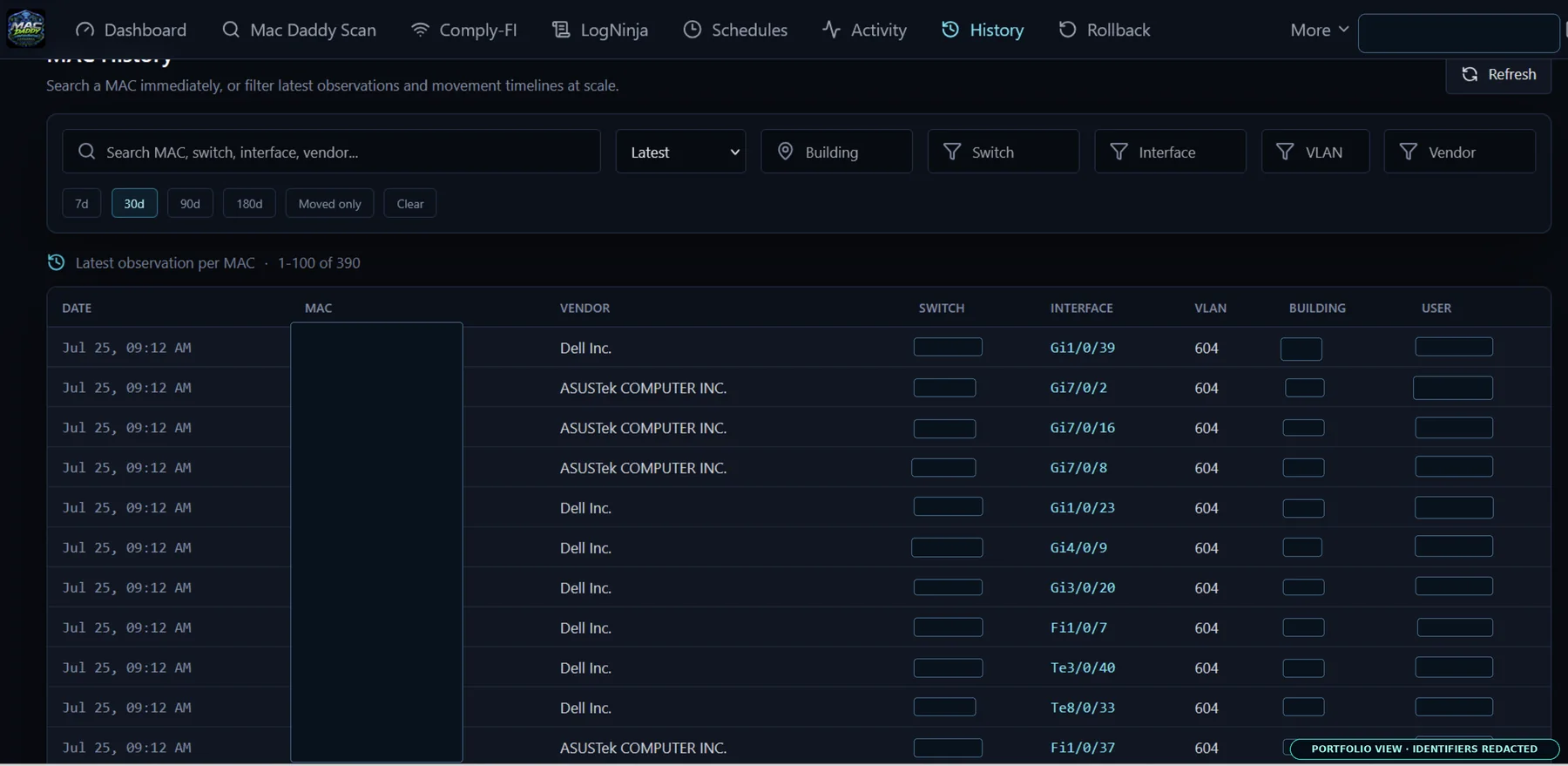
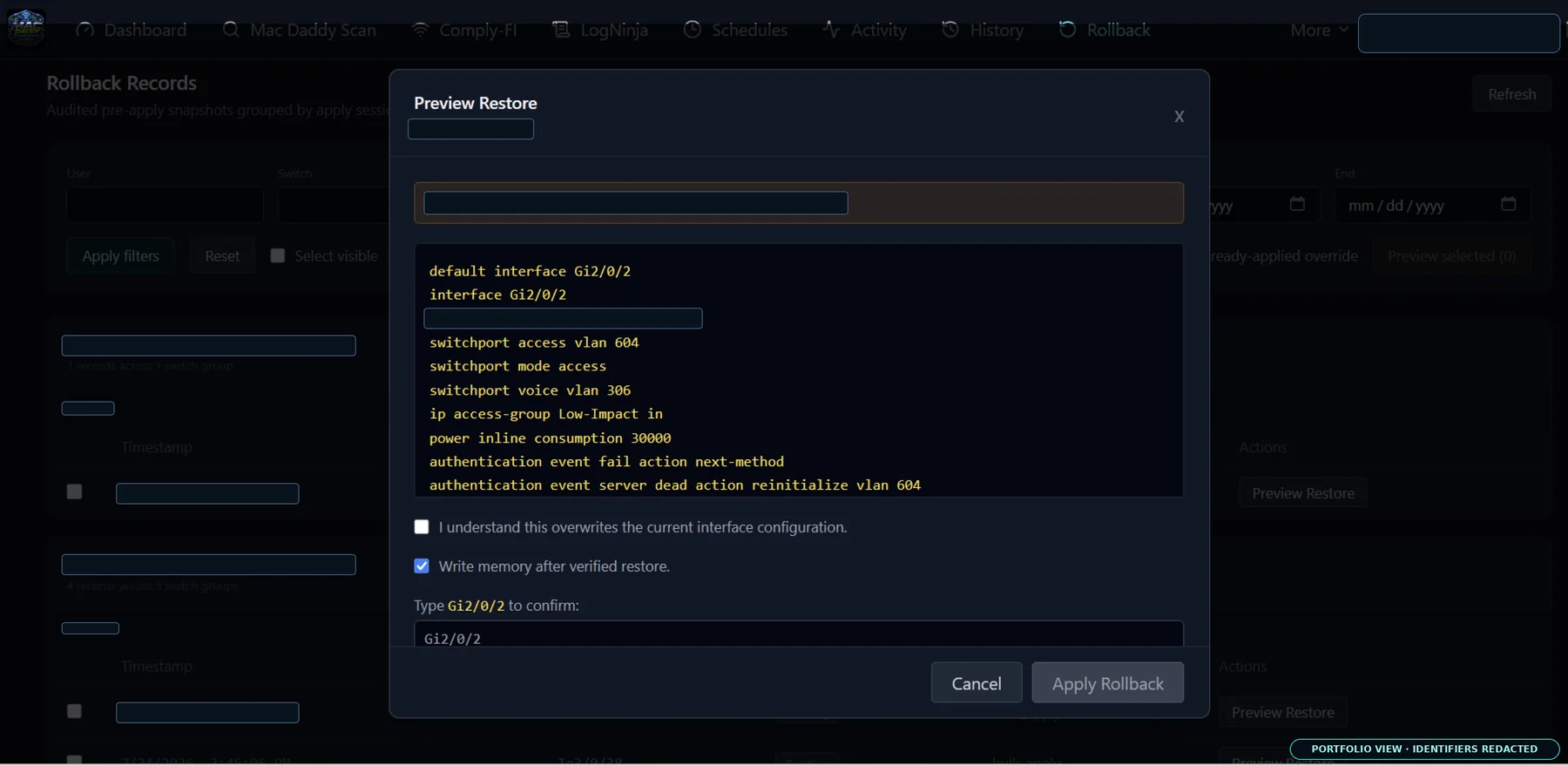
Preview and apply independently re-read device state. If required neighbor evidence fails, a target is stale, or the interface no longer satisfies policy, the operation stops closed.
Start where the MAC-routing evidence is most concentrated, then walk the path instead of opening sessions to every access switch.
Bulk work suppresses per-interface saves and writes memory once only after at least one target verifies.
Remediation and one-off interface tools reuse the same safety verdict, command validation, lease, rollback, verification, and audit path.
Isolated acceptance mode blocks live writes, schedules, and outbound email so test confidence does not depend on production reachability.
The v80 source includes a structured local acceptance record and a broad automated test suite spanning parsers, policy, schedules, authorization, modules, and recovery behavior. This page describes the verified build without claiming a deployment date that has not been publicly confirmed.
Dionisio NES established the useful core: inventory-driven lookup, path discovery, diagnostics, and guarded actions. MacDaddy retained those practical concepts, then rebuilt the experience around shared policy, job coordination, reporting, authorization, scheduling, and durable evidence.
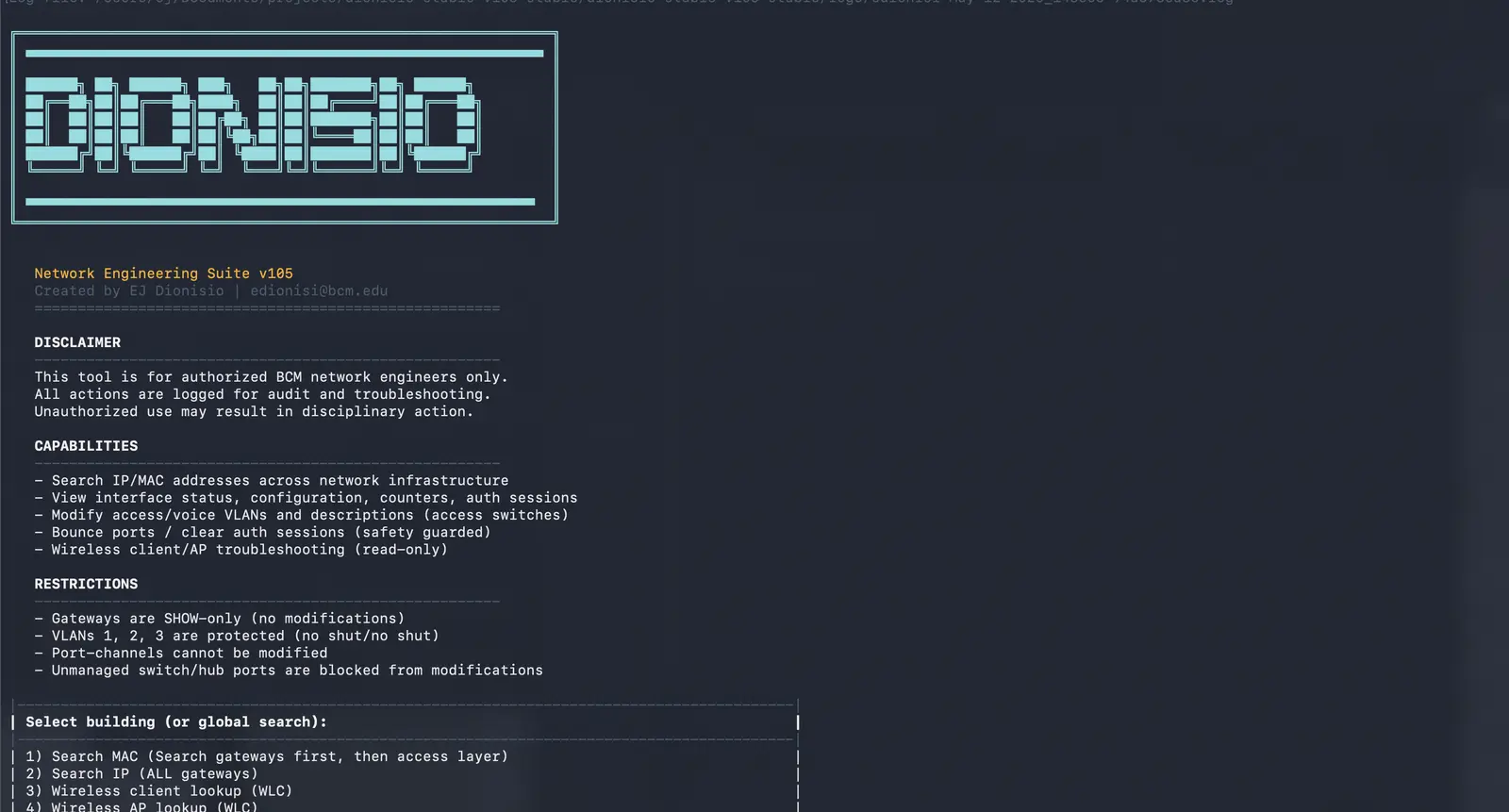
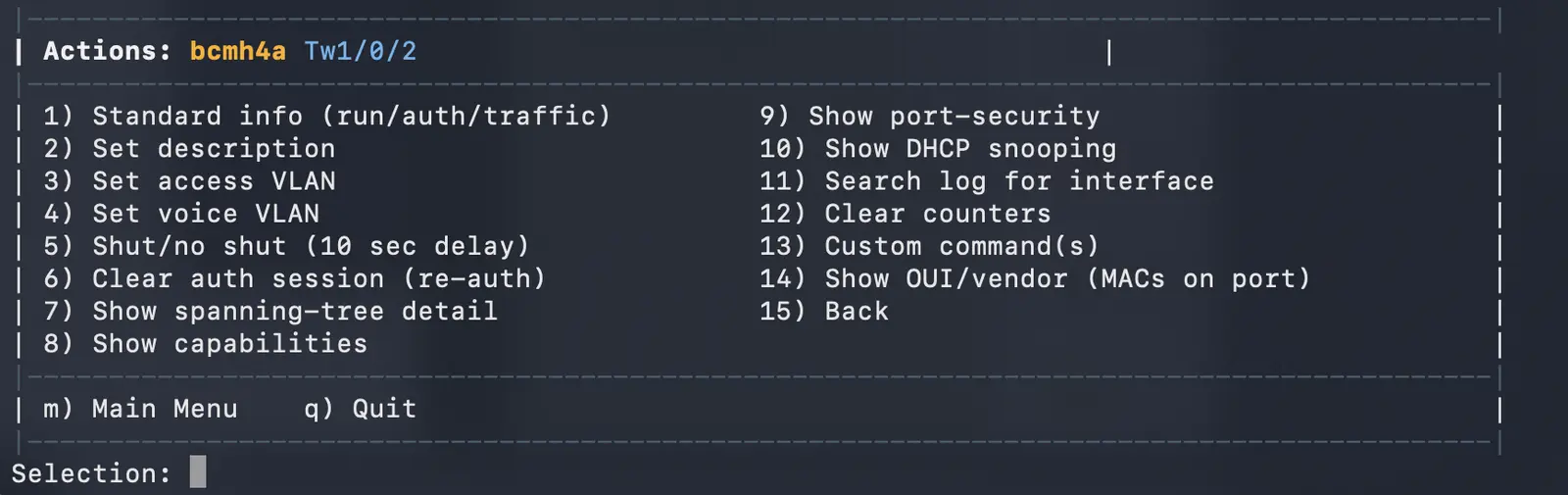
The most important changes came from treating device access as a shared, failure-prone resource: bound the jump-host load, distinguish target failures from transport outages, invalidate old evidence, recover durable jobs, and keep every write on one guarded path.