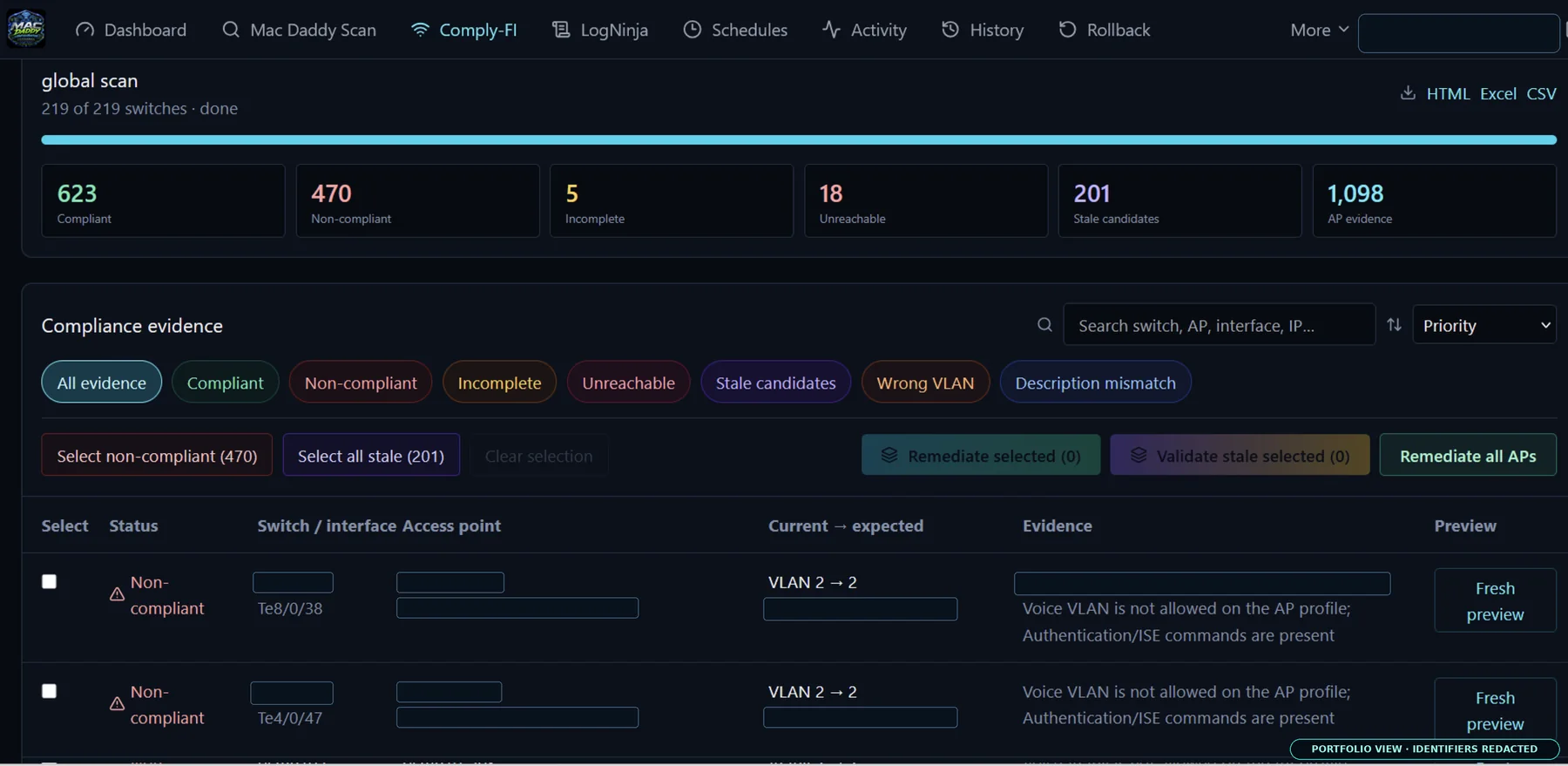
Incomplete is a first-class state
Missing evidence does not collapse into “non-compliant” and cannot silently authorize remediation.
MacDaddy module / compliance
Discover access points, classify interface policy drift, preview exact remediation, and make every approved change verifiable and reversible.
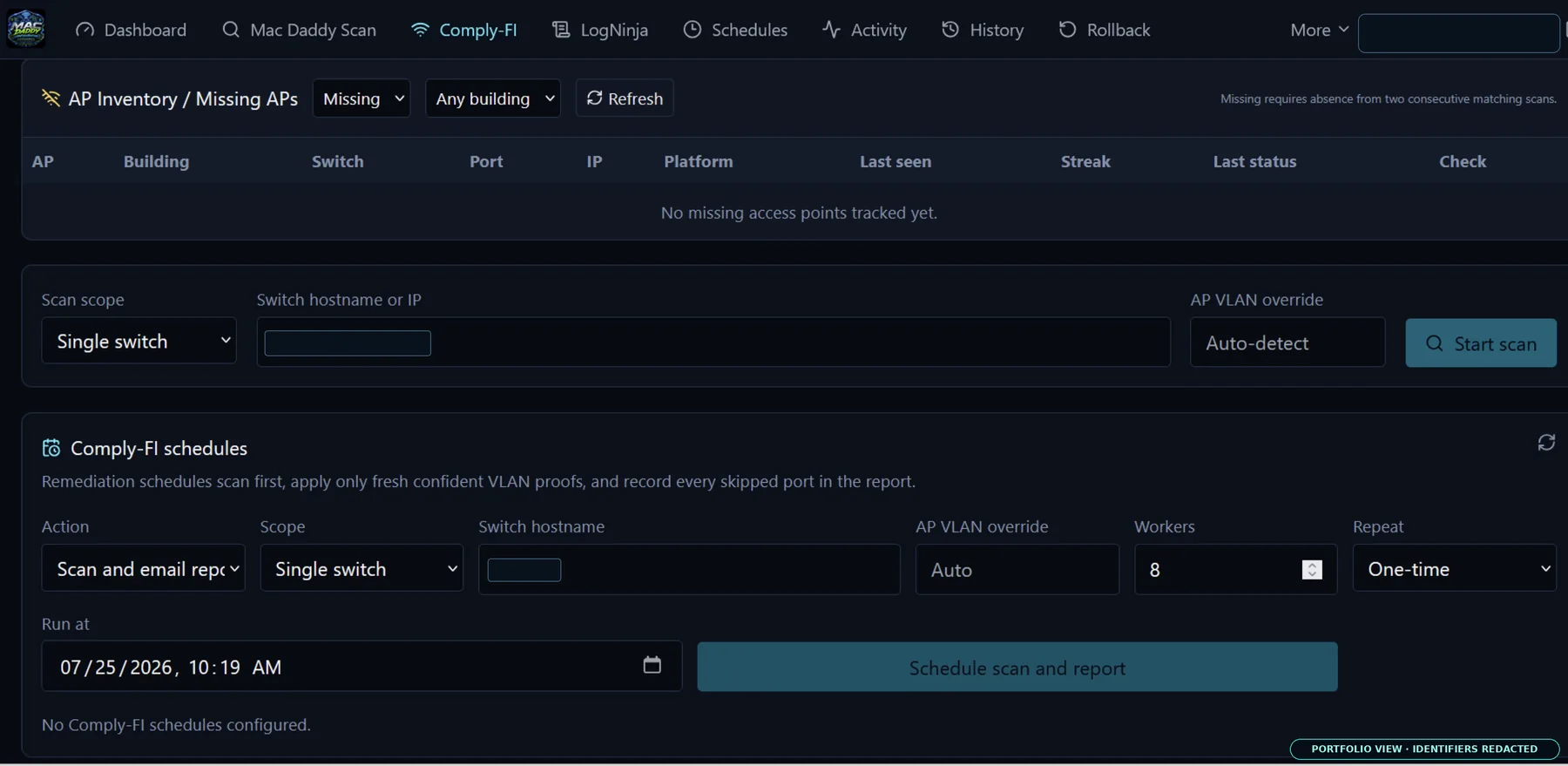
Access-point discovery and setup had to be repeated across a large campus environment. I wanted to automate both finding the APs and checking the switch-port configuration, but I did not want a fleet scan to become permission for a fleet-wide write.
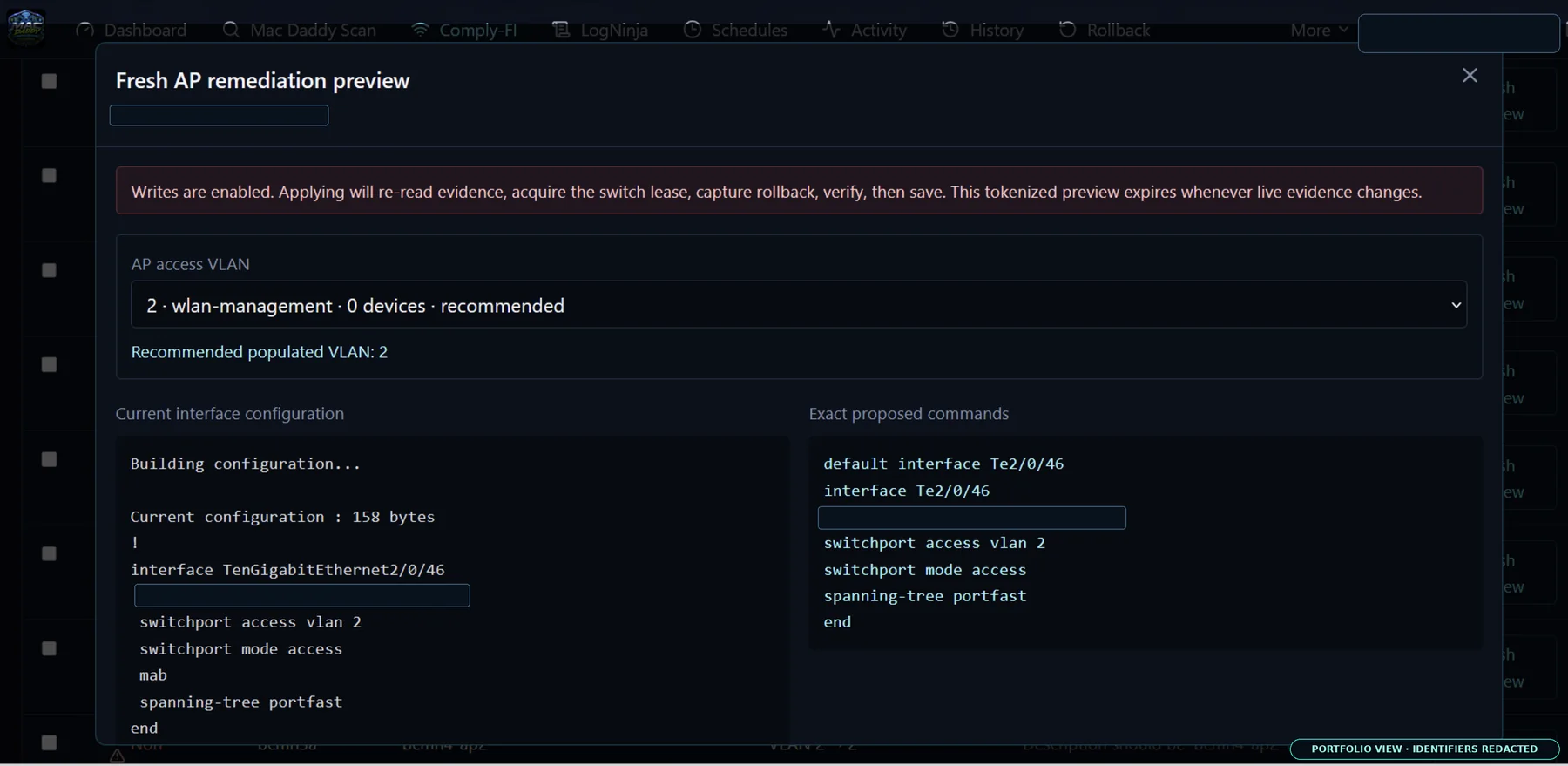
Comply-FI separates classification from authorization to change. It collects evidence, classifies uncertainty explicitly, creates a fresh preview, captures rollback state, applies through the shared MacDaddy guard, and verifies the result before saving.
Discovery can be broad; permission to change must stay narrow. Missing neighbor evidence, stale state, an unsafe interface, or a busy switch all stop the write path instead of becoming warnings an operator can click past.
Resolve scope from inventory and collect neighbor, interface, VLAN, mode, status, and policy evidence.
Keep incomplete and unreachable results distinct from genuinely compliant or non-compliant ports.
Re-read the candidate before showing exact, allowlisted remediation commands.
Recheck permission and safety, capture rollback state, and prevent overlapping switch writes.
Read back live state; persist only verified work and retain the decision trail.
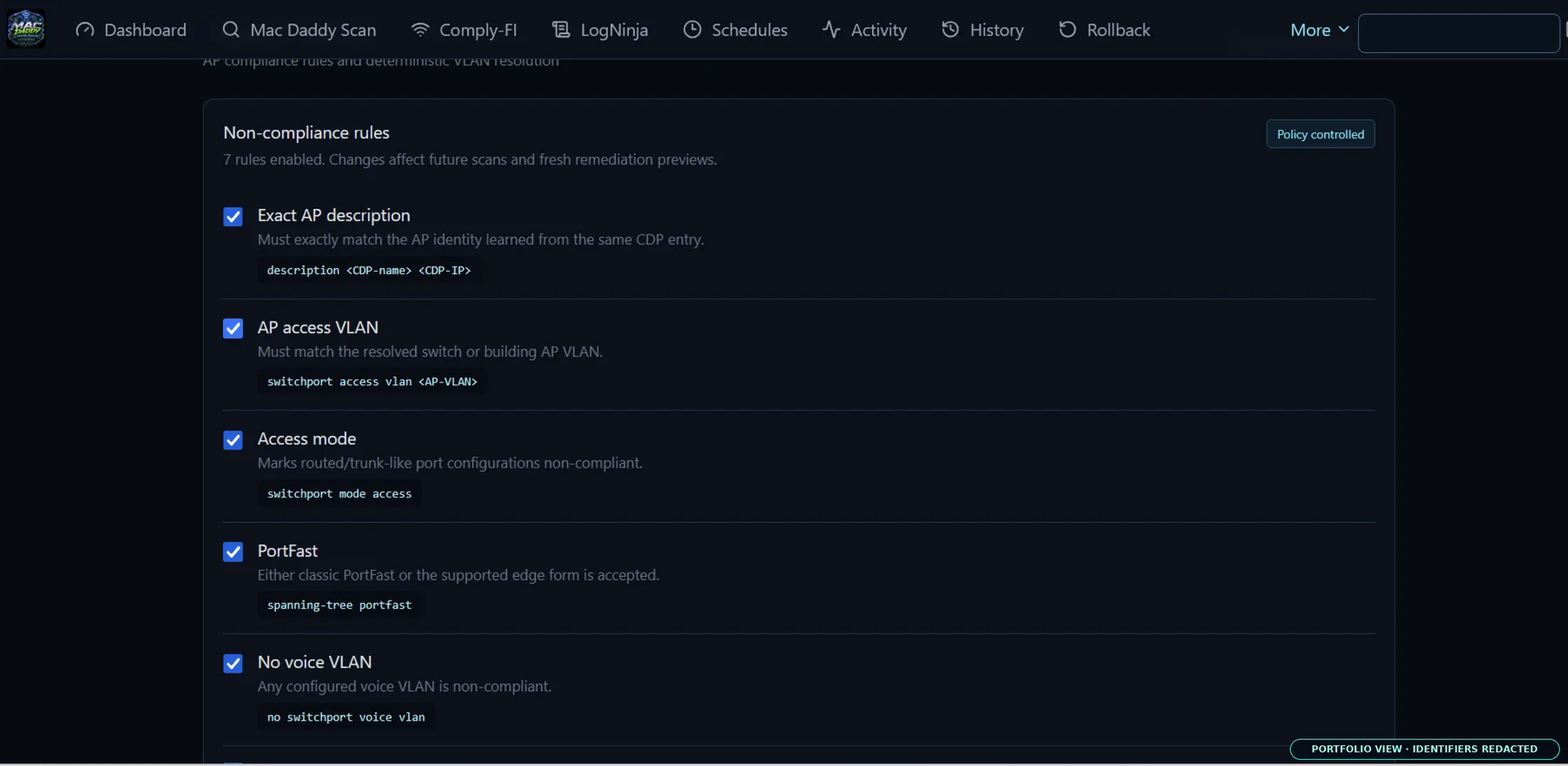
Missing evidence does not collapse into “non-compliant” and cannot silently authorize remediation.
The workflow saves configuration only after the live read-back matches the intended policy.
Comply-FI does not own a parallel SSH write path; it inherits MacDaddy's lease, command scope, rollback, verification, and audit controls.
A port can be compliant when scanned and unsafe to change later. Treating evidence freshness, job health, cooldown, permission, and write ownership as part of the compliance decision made the workflow more honest.