Reachability before collection
Cheap discovery avoids tying up device sessions and makes unreachable targets visible as a distinct result.
UPS fleet operations
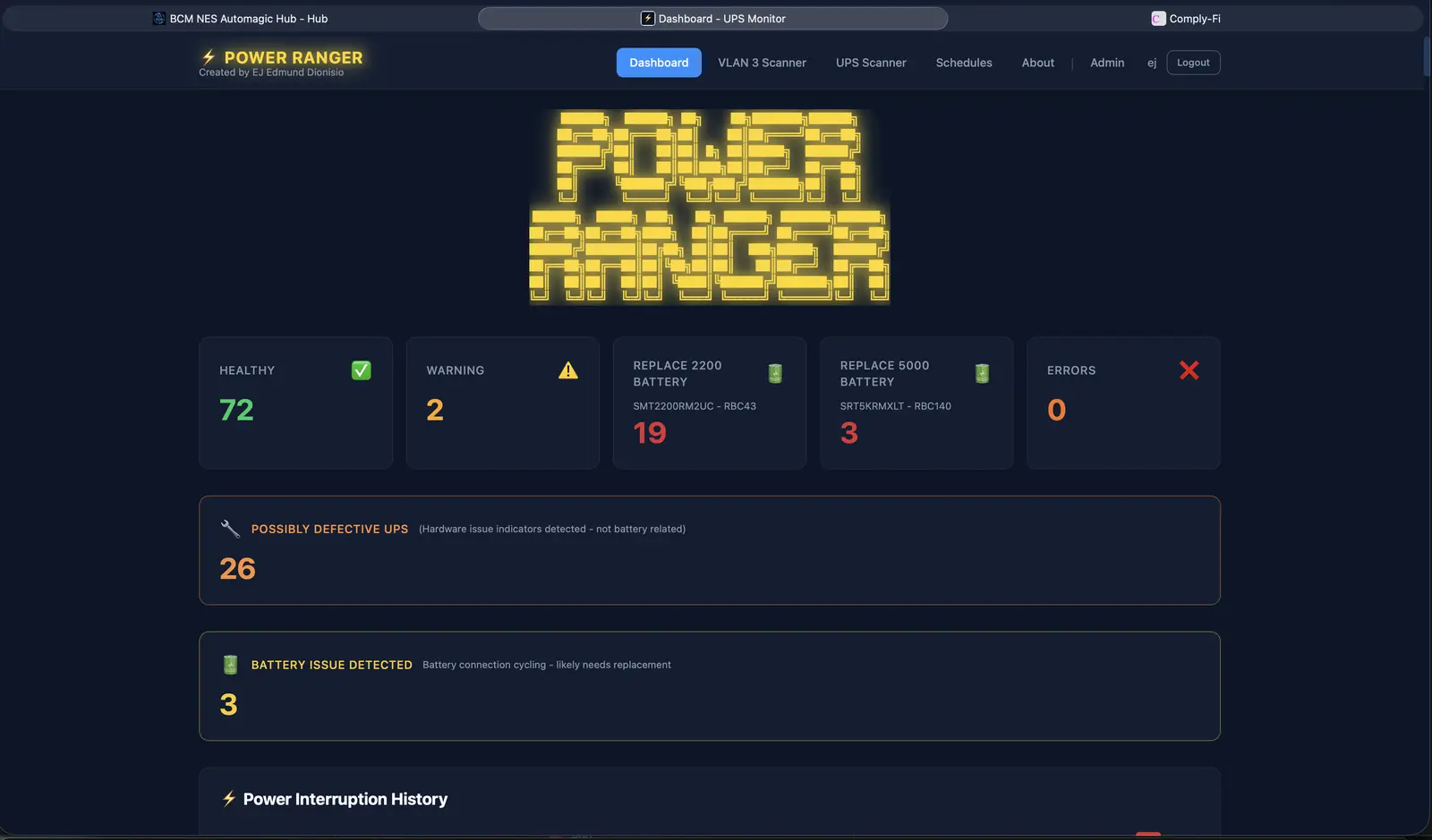
Discover UPS problems before the next outage by turning device CLI output into normalized health, event history, schedules, and reports.
I was SSHing into UPS management cards one at a time, navigating each device separately, and trying to compare scattered results in my head. It worked for a single check, but it did not scale into a useful view of fleet health or repeated power events.
Power Ranger centralizes that work. It discovers cards, collects and parses health data, analyzes events and outage duration, schedules repeat scans, and makes the fleet easier to review from one dashboard.
The goal was not just fewer SSH windows. I wanted failed collection, unsupported devices, and stale data to stay visible so a clean-looking dashboard could never hide a monitoring gap.
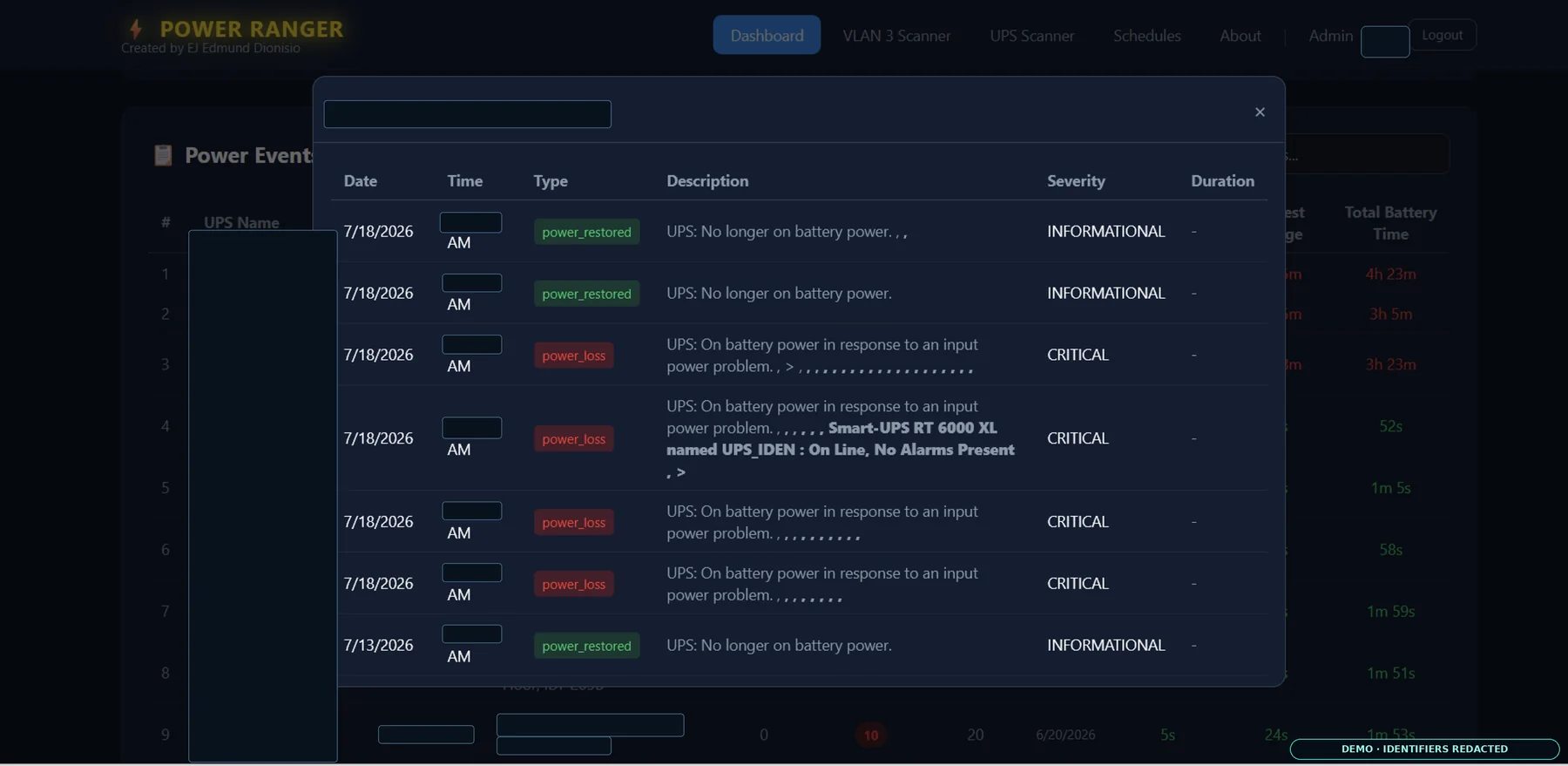
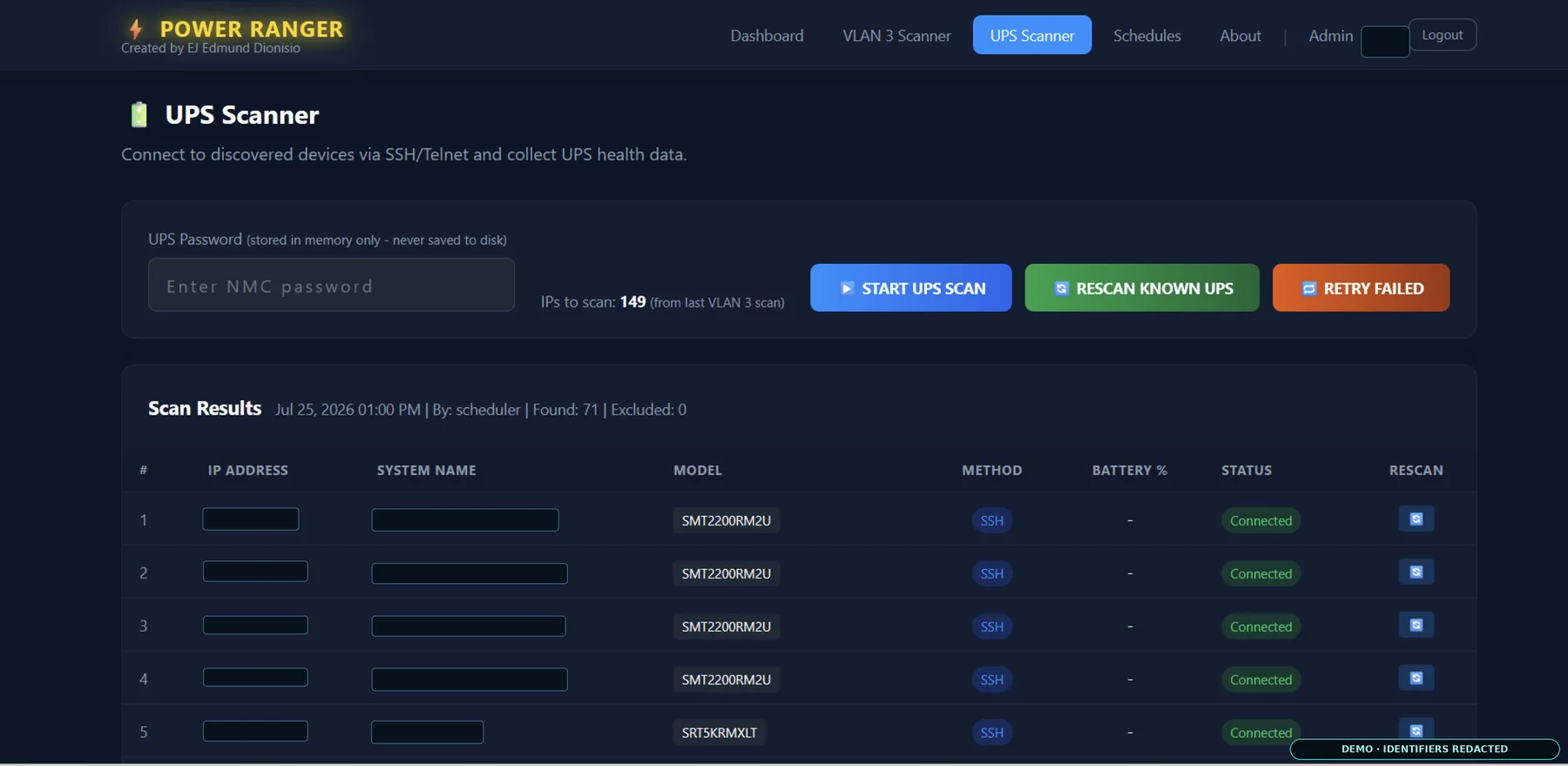
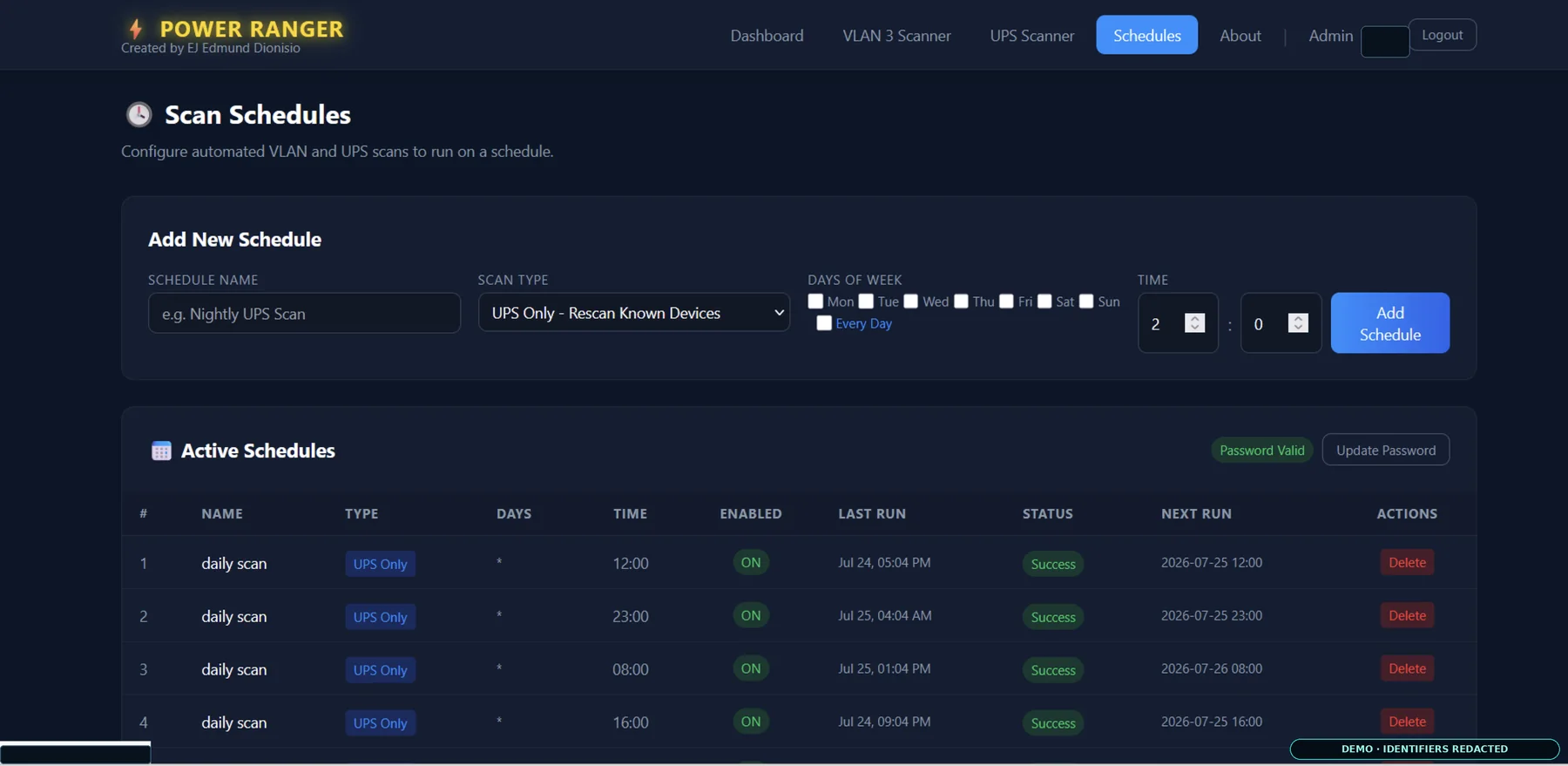
Web UIFleet dashboard, VLAN discovery, schedules, device details, events, and export.
FastAPI jobsBackground work, progress, authentication, scan coordination, and reporting.
DiscoveryICMP reachability followed by SSH or legacy-compatible management access.
Parser layerNormalize model, battery, load, runtime, firmware, network, and event data.
SQLiteDevice snapshots, scan history, events, schedules, and exports.
Select a known range or saved target set without publishing production addressing.
Use bounded reachability checks before spending sessions on device collection.
Handle supported access methods and parse vendor CLI into consistent records.
Identify notable power events and derive operator-friendly duration and timing context.
Repeat the scan, preserve history, and export evidence for operational follow-up.
Cheap discovery avoids tying up device sessions and makes unreachable targets visible as a distinct result.
UI and reporting consume structured records instead of inheriting firmware-specific CLI formatting.
A scheduled result includes timing and failure state, not only the last known healthy value.
The roadmap moves routine health polling toward SNMPv3 while retaining CLI for event history and controlled compatibility fallback. Roadmap work is labeled separately from the deployed workflow.
A dashboard full of healthy values is misleading if collection failures disappear. The useful model distinguishes reachable, unsupported, authentication failed, incomplete, and stale devices so an operator can tell fleet health from data-pipeline health.